
At Navigo, we have been watching the digital retail landscape evolve for years. The writing has been on the wall: beauty retail is shifting toward marketplace models. Amazon has set the standard with endless assortment and consumer convenience, and now Ulta is preparing to launch its own third-party marketplace this fall.

Sephora’s Visibility Challenge
Sephora is still the leader in prestige beauty, but the data shows cracks in the foundation. During Spring Haul 2025, Sephora’s search visibility dropped more than 22% year over year even as sponsorship spending increased by nearly 9%. In other words, more money went into paid activity, yet shoppers saw less of the brands.
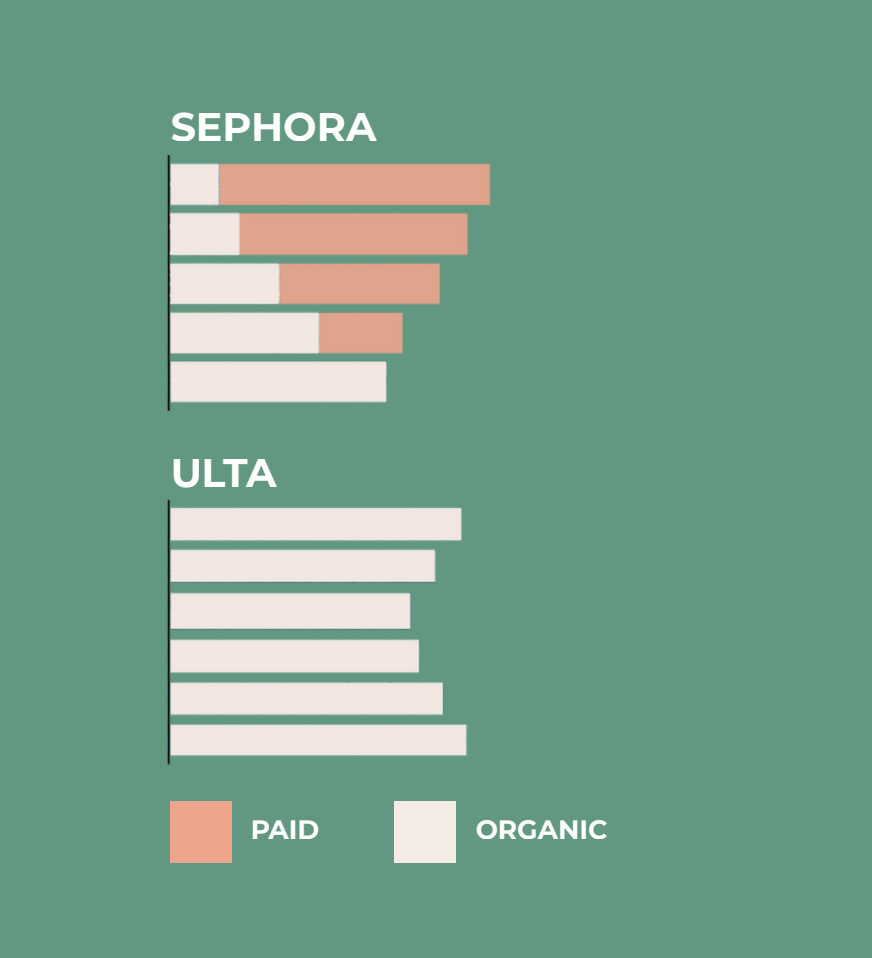
This is not a one-off problem. Sephora’s top brands rely far more on paid media than Ulta’s. For half of Sephora’s top ten brands, more than 35% of their keyword coverage comes from paid placements. Compare that to Ulta, where many leading brands maintain strong organic visibility and layer paid media on top to drive scale.
This imbalance leaves Sephora vulnerable. If organic discovery continues to decline, the platform becomes overly reliant on advertising spend to maintain sales momentum.
The Black Box of Sephora Media
At the heart of this issue is Sephora’s closed approach to retail media. Unlike Ulta, Sephora does not allow brands to directly control where their ad dollars go. Media spend is pooled and managed by Sephora, with little transparency into placements or performance.
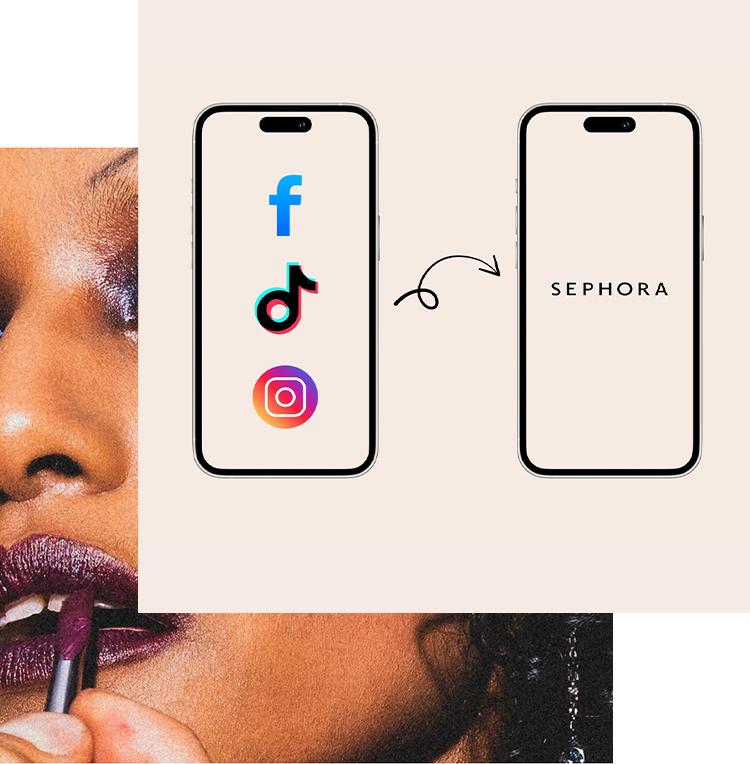
This approach may have worked when Sephora’s brand halo alone guaranteed visibility. But in today’s environment, where shoppers begin their journey on TikTok, compare prices on Amazon, and complete transactions on Ulta, opacity is no longer an option.
For brands, this is a black box. They cannot optimize for hero SKUs, they cannot plan investments around tentpole events, and they cannot confidently measure return on spend. The result is hesitation. Many brands are reluctant to increase investment because they do not know if those dollars are working for them.
Why a marketplace is sephora’s moment
Launching a marketplace could solve multiple problems for Sephora while also unlocking new opportunities for brands.
DEFEND DEMAND
As Ulta expands supply, Sephora must give its shoppers more reasons to stay within the Sephora ecosystem. A marketplace would keep consumers from splitting their purchases between Ulta and Amazon.
EXPAND ASSORTMENT
WITHOUT RISK
Sephora could bring in indie prestige, masstige disruptors, and fast-moving trend brands without taking on the costs of wholesale inventory.
ENCOURAGE MORE
MEDIA INVESTMENT
As Ulta expands supply, Sephora must give With a marketplace structure, Sephora could finally offer direct and transparent advertising tools. Brands would see where their money goes, optimize spend, and scale confidently.
CAPTURE TREND VELOCITY
Minis, refillables, and hybrid formats are driving growth across categories. A marketplace would allow Sephora to test and scale these trends faster than traditional buying cycles.
STAY COMPETITIVE IN CROSS-CHANNEL SHOPPING
When awareness happens on social media, Sephora needs to be positioned as a strong conversion destination. A broader and more dynamic marketplace is how they get there.
The Cost of Waiting
Ulta is moving first, and that gives them a head start in building relationships with brands. For companies under the $50 price point in particular, Ulta’s marketplace will become the natural choice for scaling. The longer Sephora waits, the more likely it is that these emerging brands will commit elsewhere.
Amazon will continue to dominate on convenience and volume.
Ulta will now dominate on breadth and access.

Sephora risks being defined only by prestige curation, a position that feels increasingly narrow in today’s marketplace- driven environment.
The Black Box of Sephora Media
At the heart of this issue is Sephora’s closed approach to retail media. Unlike Ulta, Sephora does not allow brands to directly control where their ad dollars go. Media spend is pooled and managed by Sephora, with little transparency into placements or performance.
This approach may have worked when Sephora’s brand halo alone guaranteed visibility. But in today’s environment, where shoppers begin their journey on TikTok, compare prices on Amazon, and complete transactions on Ulta, opacity is no longer an option.
#1
BUILD MEDIA STRATEGIES THAT ALIGN PAID WITH ORGANIC
Whether on Ulta, Amazon, or Sephora, brands that layer paid activity on top of strong organic discoverability are the ones who pull ahead.
#2
INVEST IN DATA AND VISIBILITY
Transparency into where dollars are spent and how customers are shopping will separate leaders from laggards
**This analysis is based on publicly observable online signals and reputable third-party datasets. While it does not represent a retailer’s full omnichannel sales, it provides directional insight into consumer demand shifts.**
Ready to Grow Your Brand?
Say Hello!
Connect with Navigo Marketing to discover how we can help your beauty brand achieve online success.